
Here is how you can protect yourself from extreme heat

On Monday, citizens in Sindh’s provincial capital, Karachi, experienced sweltering temperatures as the mercury touched 44°C.

The Pakistan Meteorological Department (PMD), in its daily advisory on Monday, said that very hot and dry weather is expected to persist in the southern parts of the country over the week.

As of 4pm, the temperature in Karachi stood at 44°C with a relative humidity of 8 per cent and a feel-like temperature of 40°C.

Meanwhile, according to PMD’s May outlook, mean temperatures are expected to remain above normal nationwide, which could “increase the potential for heat spikes and heatwave conditions, especially over the plain areas of Punjab, Sindh and Balochistan”.
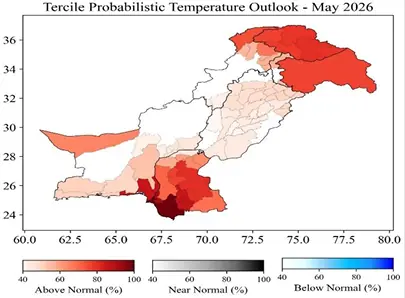
  Probabilistic temperature outlook for May 2026. — Infographic via PMD
Probabilistic temperature outlook for May 2026. — Infographic via PMD

Heat extremes can worsen health risks from chronic conditions (cardiovascular, mental, respiratory and diabetes related conditions) and cause acute kidney injury, according to the World Health Organisation (WHO).

As per WHO estimates, the frequency of extreme heat and heat waves is expected to rise in the coming years due to climate change, increasing the risk of heat exposure and illness.
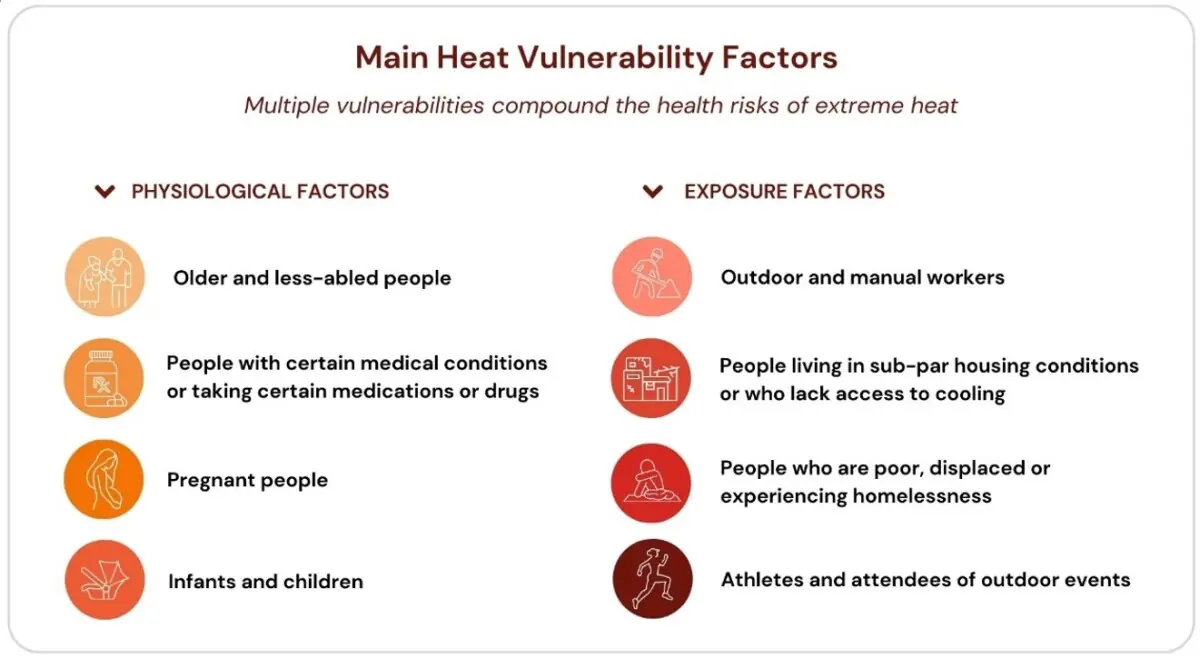
Main heat vulnerability factors. — Infographic via WHO

Here is how you can protect yourself and your loved ones from the rising temperatures, according to the guidelines issued by the WHO.

  • Avoid going outside and doing strenuous activity during the hottest time of day.
  • Stay in the shade when going out and avoid direct exposure to the sun.
  • Make sure to spend at least two to three hours in a cool place throughout the day.
  • Open windows after dark to use the night air to cool down your home, and cover them with blinds to block direct sunlight during the day.
  • Keep your body cool and hydrated, taking cool showers or baths or wet your skin using a damp cloth, spray or wet clothing.
  • Use light and loose-fitting clothing and bed linens.
  • Make sure to stay hydrated. Drink at least two to three litres of water per day.
  • Wear wide-brimmed hats, sunglasses, and sunscreen to protect your skin from the sun’s rays.

What to do in case of heatstroke

In case of heatstroke, the WHO advises that one should immediately call for emergency medical help, use any available means to cool the person down and keep a close eye on their condition.

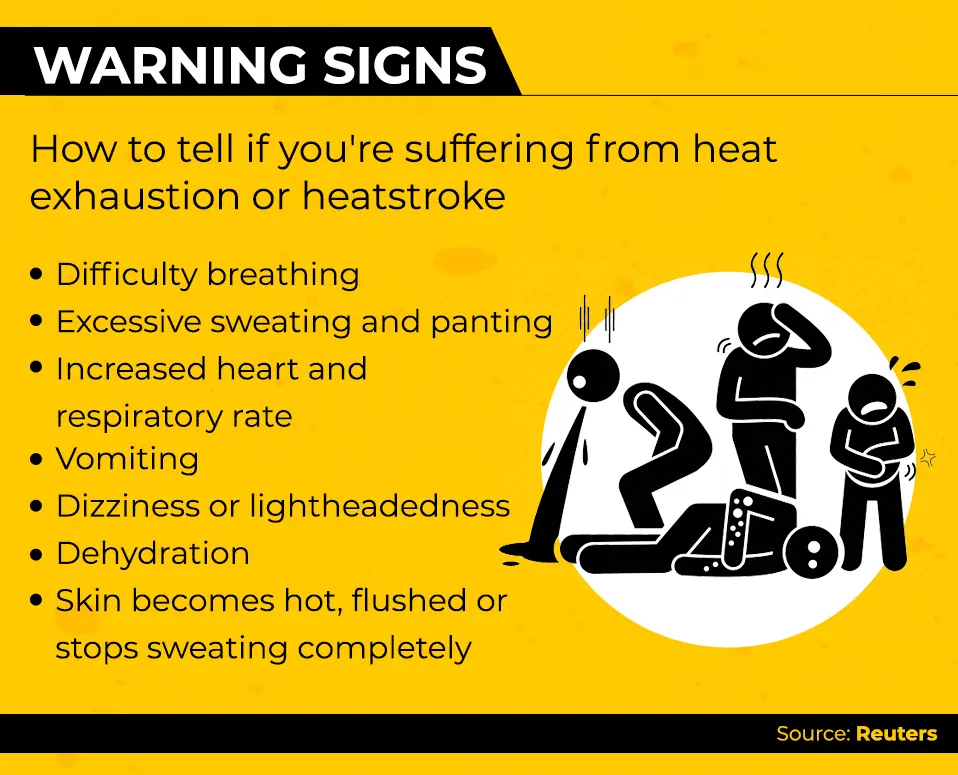
Signs of heatstroke can include feeling faint, dizzy or nauseous, stopping sweating, or losing consciousness.


from Dawn - Home https://ift.tt/WHnbdKR

Comments

Popular posts from this blog

Ministers rubbish notion that proposed retirement age extension to favour ‘one particular institution’

Information Minister Attaullah Tarar on Tuesday rubbished the notion that a proposed extension in the retirement age was to favour “one particular institution”, adding that the move would be implemented across the board if approved. The rebuttal comes in the wake of media reports claiming that the government was mulling changes to the Constitution to fix the tenure of the chief justice . Currently, judges of the Supreme Court, including the chief justice, retire after attaining the age of superannuation, i.e. 65 years, as stipulated in Article 179 of the Constitution. While giving his opinion recently on the reports of the constitutional amendment, Law Minister Azam Nazeer Tarar had said he “will not vehemently turn down the proposals related to the tenure of the chief justice”. Addressing the issue during a press conference in Islamabad today along since Finance Minister Muhammad Aurangzeb and the law minister, Attaullah said the extension in the retirement age was “a proposal to a...

Explainer: Iran’s economy faces rocky road amid rising prices, falling currency

Iran’s economy is going through one of its most difficult periods in years, fueled by sanctions, high inflation, and a significant drop in the value of the national currency, the rial. These pressures have had a direct impact on living standards and have also fueled recent protests. The protests began on Dec. 28 in commercial hubs in the capital Tehran, when shopkeepers, merchants, and small business owners staged strikes and demonstrations to protest soaring inflation, the collapsing rial, and deteriorating economic conditions, and have since grown into nationwide anti-government expressions of discontent involving workers, students, and others across multiple cities. The Iranian president said Sunday that his government is determined to address Iran’s economic problems amid the protests. Masoud Pezeshkian said the government admits to “shortcomings and problems” and is working hard to alleviate the people’s concerns, especially on the economy. Currency collapse at the centre of c...

Mitchell Starc surpasses Wasim Akram as most prolific left-arm pacer in Test history

Australian veteran Mitchell Starc became the most prolific left-arm paceman in Test history on Thursday, surpassing Pakistan great Wasim Akram. The 35-year-old bagged England’s Harry Brook at the Gabba in Brisbane on day one of the day-night second Ashes Test for his 415th wicket since his debut at the same ground 14 years ago. It moved him past Wasim, widely recognised as the greatest left-arm bowler the sport has seen. Wasim played 104 Tests for his 414 wickets with Starc reaching the milestone in his 102nd, helped by a career-best 7-58 in the first innings of the opening Ashes Test at Perth. Starc is now 16th on the all-time wicket-taker list and could move above both India’s Harbhajan Singh (417) and South Africa’s Shaun Pollock (421) in the current pink-ball Test. After that he will have New Zealand’s Richard Hadlee (431) in his sights. from Dawn - Home https://ift.tt/xclHiX2