
What does a US naval blockade of Iran mean for oil flows?

The US military said it would block shipping traffic in and out of Iran’s ports starting at 10am ET (7pm PKT) on Monday, a move that would prevent roughly two million barrels of Iranian oil a day from entering the world’s markets, further tightening global supply.

Here are details on the planned blockade and its implications for oil markets.

What was announced?

After weekend peace talks in Islamabad between negotiators from the US and Iran ended without a deal, US President Donald Trump said the US Navy “will begin the process of BLOCKADING any and all ships trying to enter, or leave, the Strait of Hormuz”.

The US military’s Central Command (Centcom) later said the blockade would only apply to ships going to or from Iran, including all Iranian ports on the Gulf and Gulf of Oman.

US forces would not impede freedom of navigation for vessels transiting the Strait of Hormuz to and from non-Iranian ports and additional information would be provided, it said.

Iran’s Revolutionary Guards responded to Trump by warning that military vessels approaching the strait would be considered a ceasefire breach and dealt with harshly and decisively.

Retired Admiral Gary Roughead, a former chief of US naval operations, cautioned that Iran could fire on ships in the Gulf or attack the infrastructure of Gulf states that host US forces.

What is the implication for oil flows

Blocking Iranian shipments would disconnect a significant source of oil from the world’s markets.
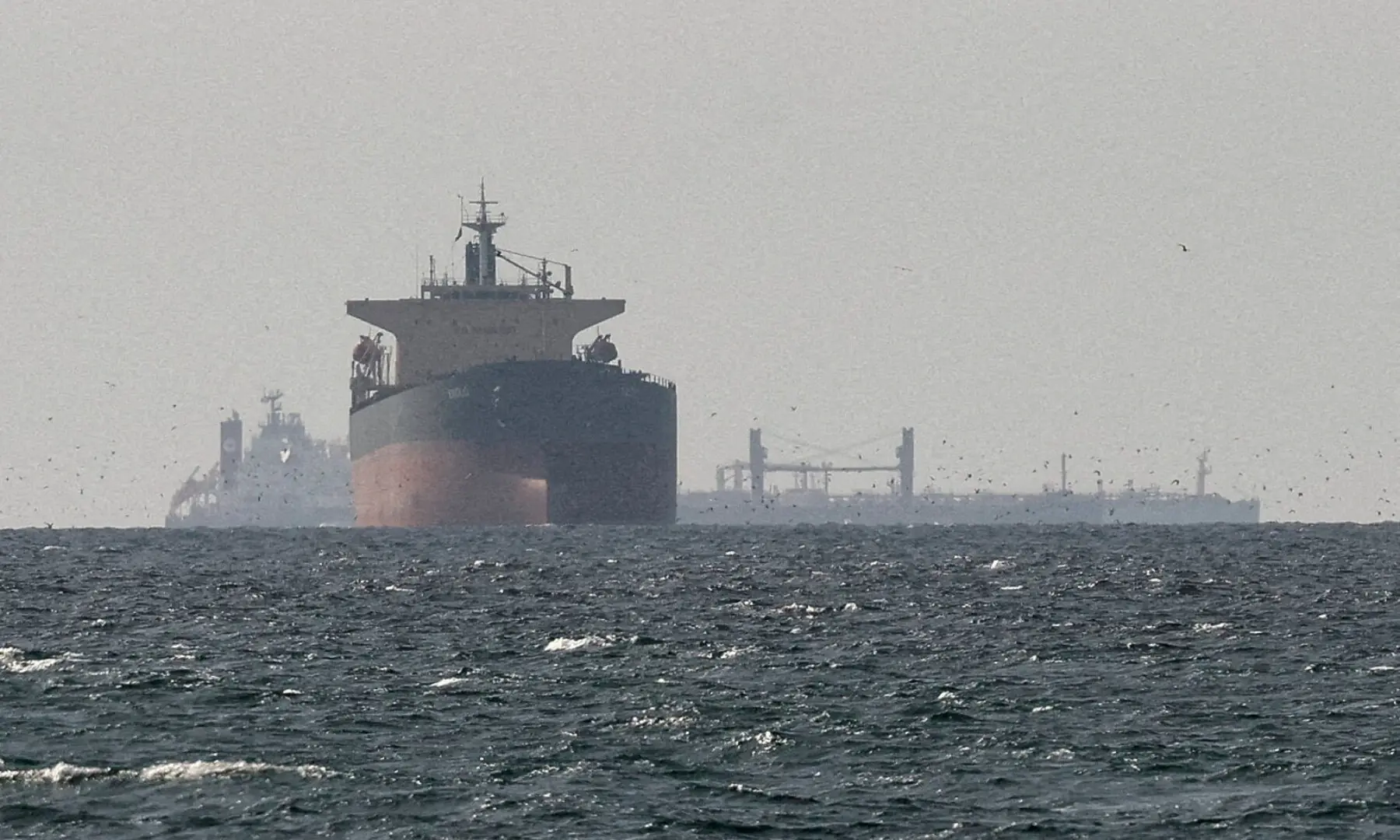
 Cargo ships in the Gulf, near the Strait of Hormuz, as seen from northern Ras al-Khaimah, near the border with Oman’s Musandam governance, in United Arab Emirates on March 11, 2026. — Reuters/File
Cargo ships in the Gulf, near the Strait of Hormuz, as seen from northern Ras al-Khaimah, near the border with Oman’s Musandam governance, in United Arab Emirates on March 11, 2026. — Reuters/File

Iran exported 1.84m barrels per day (bpd) of crude in March and has shipped 1.71m bpd thus far in April, compared with a full-year average of 1.68m bpd in 2025, according to Kpler data.

However, a surge in Iranian output before the war started on February 28 has led to near-record levels of Iranian oil loaded on ships, with more than 180m barrels floating as of earlier this month, according to Kpler data.

What about oil flows from other Gulf producers?

Shipping traffic through the Strait of Hormuz, which has been severely curtailed by an Iranian blockade since the start of the war, remains nearly halted despite last week’s two-week ceasefire agreement between Washington and Tehran.

Oil tankers were steering clear of the strait on Monday.

A Liberia-flagged very large crude carrier (VLCC), Mombasa B, transited the strait earlier on Sunday and was ballasting in the Gulf.

Another VLCC, the Malta-flagged Agios Fanourios I, which tried to pass through the strait on Sunday to load Iraqi crude destined for Vietnam, turned back and was anchored near the Gulf of Oman.

On Saturday, three fully loaded supertankers passed through the Strait of Hormuz in what appeared to be the first vessels to exit the Gulf since the US-Iran ceasefire deal.

Some 187 laden tankers carrying 172m barrels of crude oil and refined products were inside the Gulf as of last Tuesday, according to Kpler.

Which importers are most affected?

Before the war, most Iranian oil exports were shipped to China, the top global crude importer. Last month, the US unveiled a sanctions waiver that has enabled other buyers, including India, to import Iranian oil.
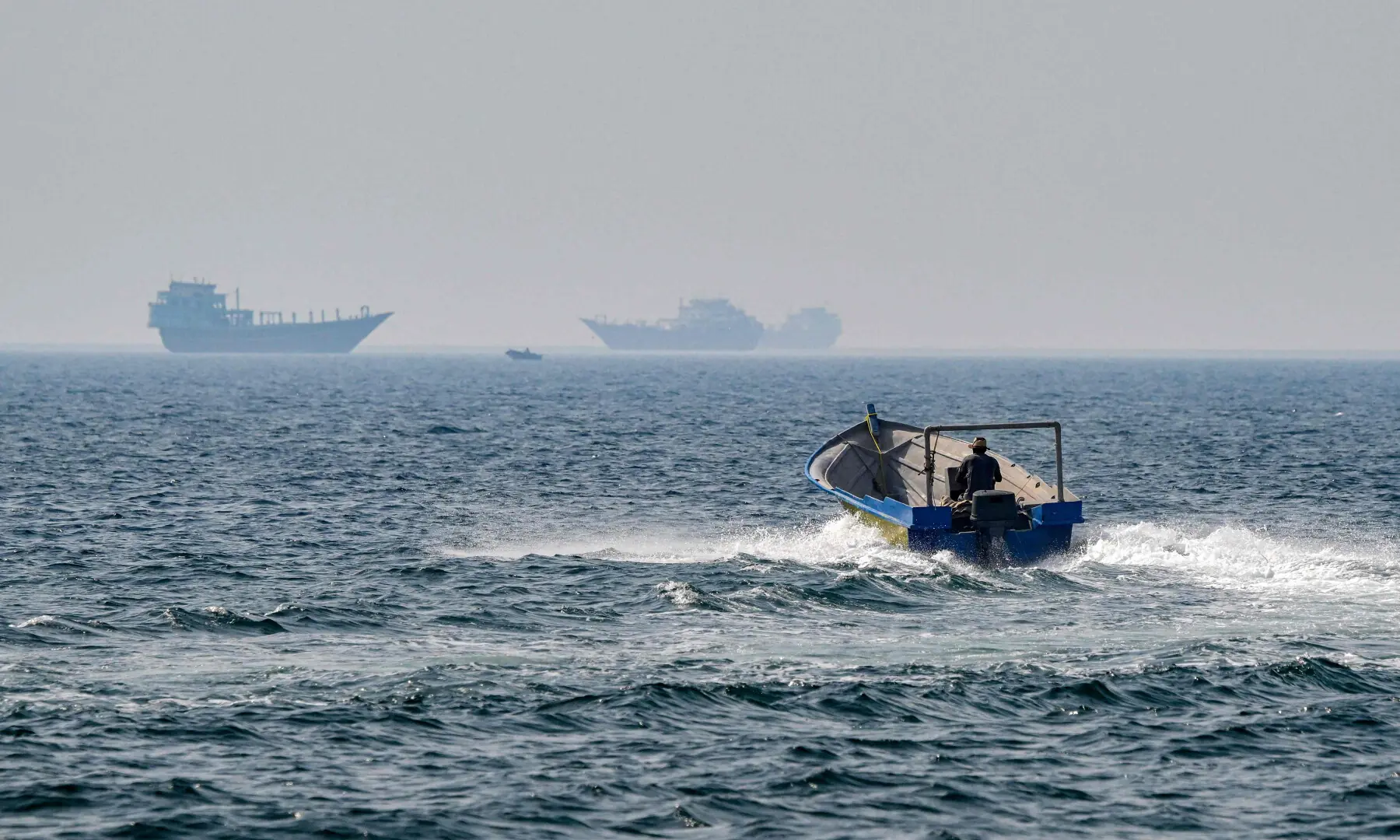
 A boat sails in the waters of the Strait of Hormuz off Khasab in Oman’s northern Musandam peninsula on June 25, 2025. — AFP/File
A boat sails in the waters of the Strait of Hormuz off Khasab in Oman’s northern Musandam peninsula on June 25, 2025. — AFP/File

India is set to receive its first crude shipment from Iran in seven years this week, ship tracking data from LSEG and Kpler showed on Wednesday.

Before the war, roughly 20pc of global oil and natural gas exports were shipped through the Strait of Hormuz, with most cargoes headed to Asia, the largest importing region.


from Dawn - Home https://ift.tt/huC4xUm

Comments

Popular posts from this blog

Ministers rubbish notion that proposed retirement age extension to favour ‘one particular institution’

Information Minister Attaullah Tarar on Tuesday rubbished the notion that a proposed extension in the retirement age was to favour “one particular institution”, adding that the move would be implemented across the board if approved. The rebuttal comes in the wake of media reports claiming that the government was mulling changes to the Constitution to fix the tenure of the chief justice . Currently, judges of the Supreme Court, including the chief justice, retire after attaining the age of superannuation, i.e. 65 years, as stipulated in Article 179 of the Constitution. While giving his opinion recently on the reports of the constitutional amendment, Law Minister Azam Nazeer Tarar had said he “will not vehemently turn down the proposals related to the tenure of the chief justice”. Addressing the issue during a press conference in Islamabad today along since Finance Minister Muhammad Aurangzeb and the law minister, Attaullah said the extension in the retirement age was “a proposal to a...

Explainer: Iran’s economy faces rocky road amid rising prices, falling currency

Iran’s economy is going through one of its most difficult periods in years, fueled by sanctions, high inflation, and a significant drop in the value of the national currency, the rial. These pressures have had a direct impact on living standards and have also fueled recent protests. The protests began on Dec. 28 in commercial hubs in the capital Tehran, when shopkeepers, merchants, and small business owners staged strikes and demonstrations to protest soaring inflation, the collapsing rial, and deteriorating economic conditions, and have since grown into nationwide anti-government expressions of discontent involving workers, students, and others across multiple cities. The Iranian president said Sunday that his government is determined to address Iran’s economic problems amid the protests. Masoud Pezeshkian said the government admits to “shortcomings and problems” and is working hard to alleviate the people’s concerns, especially on the economy. Currency collapse at the centre of c...

The Republican primary race for president in 2024

The Republican primary race for president in 2024 is already shaping up to be a competitive one. There are a number of high-profile candidates who have already announced their intention to run, and more are expected to join the field in the coming months. The frontrunner for the nomination is former President Donald Trump. Trump has been teasing a 2024 run for months, and he has a large and loyal following among Republican voters. However, he is also a polarizing figure, and his candidacy could alienate some moderate Republicans. Another potential contender for the nomination is Florida Governor Ron DeSantis. DeSantis has been praised by many conservatives for his handling of the COVID-19 pandemic and his opposition to vaccine mandates. He is also seen as a rising star in the Republican Party. Other potential candidates include former Vice President Mike Pence, former Ambassador Nikki Haley, and Senator Tim Scott. Pence is a more traditional Republican who could appeal to moderate vote...