The hall at the Pakistan Embassy in Washington glowed in Christmas colours on Saturday evening.
Red and gold decorations framed the space, while green — the unmistakable green of Pakistan — appeared everywhere: in flags, ribbons and lapel pins. White lights shimmered softly, echoing both the season and the crescent-and-star that defines the country these guests continue to call their own.
The pre-Christmas gathering, hosted for Pakistani Christians and their neighbours, began and ended with a chant that left little doubt about that bond: “Pakistan Zindabad.” It was not a slogan offered for form’s sake. It was spoken with warmth, conviction, and an insistence born of long experience.
For more than a decade, speakers noted, such gatherings have brought together Muslims, Christians, Hindus, Sikhs and Jews — a quiet tradition of interfaith fellowship that has survived politics, violence and neglect.
A message from the Virginia governor praised the organisers’ work over the past twelve years and encouraged the embassy to continue supporting initiatives that unite people across faiths.
Dr Srilekha Palle, an advisor to the Virginia governor, spoke of India and Pakistan as neighbours “so much alike,” expressing a hope to visit Pakistan one day. Loving one’s country, she said, was inseparable from faith itself: to love your homeland is to reflect your love of God.
Several speakers returned to that theme — patriotism without exclusion, faith without hierarchy. Pakistan’s Deputy Ambassador Batool Qasim described the dinner as a long-standing tradition meant not only to celebrate Christmas but to welcome Christian brothers and sisters and their neighbours into a shared Pakistani space.
Visits to Pakistan by members of the Christian diaspora, she said, often become moments of rediscovery — “encounters that help them understand the country beyond headlines and fear, and help others see their place within it”.
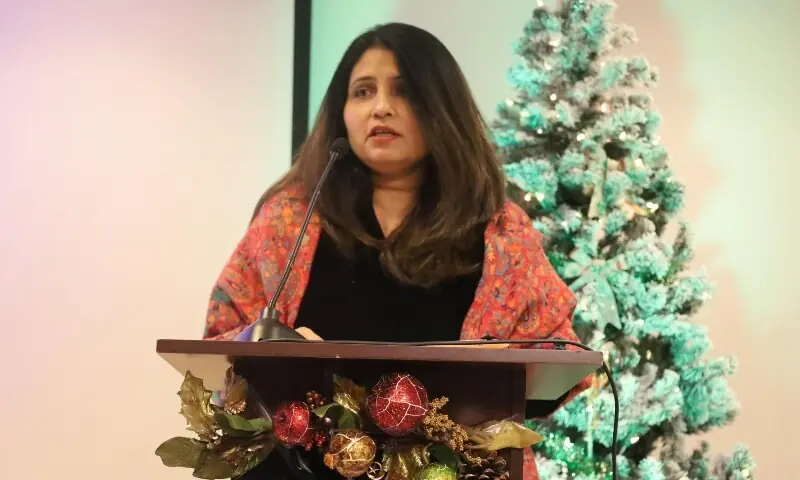
This, she said, was a time for reflection: on what had gone wrong, and on how the coming year might be made better — for everyone.
Speakers stressed that pluralism and interfaith harmony were not borrowed ideas but a vital part of Pakistan’s national fabric.
The contributions of Christians to education, healthcare and defence were acknowledged repeatedly, described not as favours but as facts — a source of collective pride.
When Pakistani Christians live abroad, one speaker noted, they often become an unrecognised bridge between Pakistan and the West, carrying stories of both pain and belonging.
There were also references to law and responsibility: protecting minority rights, proposed legislation on minority commissions, and the need for a collective will to translate words into protection.
Pastor John Nuzum of Church of the Holy Spirit offered a simple prayer, blessing both Pakistan and the United States.
The Jewish-Islamic Dialogue Society of Washington also sent a representative, stressing the importance of sustained conversation across faiths, especially in times when identity is weaponised.
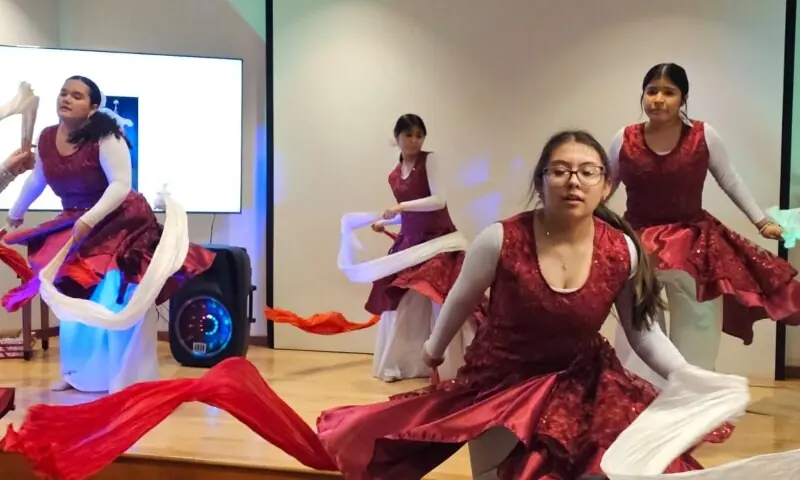
Throughout the evening, the mood remained warm — deliberately so. The reds and golds of Christmas blended with Pakistan’s green and white, mirroring the message speakers returned to again and again: faiths may differ, but citizenship should not.
That message carried an added weight because it echoed words written more than a decade ago, in moments of far darker national grief. This evening was not about charity, tolerance, or exception. It was about belonging.
When the final prayers were offered and the gathering drew to a close, the chant rose again — unprompted, confident, almost defiant: “Pakistan Zindabad.”
It came from voices that have known grief, accusation, and silence. It came from people who, despite everything done to them — and sometimes in their name — continue to claim the country as theirs.
Under red Christmas lights and Pakistan’s green and white, that claim felt both ordinary and extraordinary at once.
“Please, feel our attachment to Pakistan,” said the event’s organiser, Ilyas Masih. “Despite subzero temperatures, every seat in this large hall is occupied, and people are standing along the sidelines.”
from Dawn - Home https://ift.tt/GeTQP4A
Comments
Post a Comment