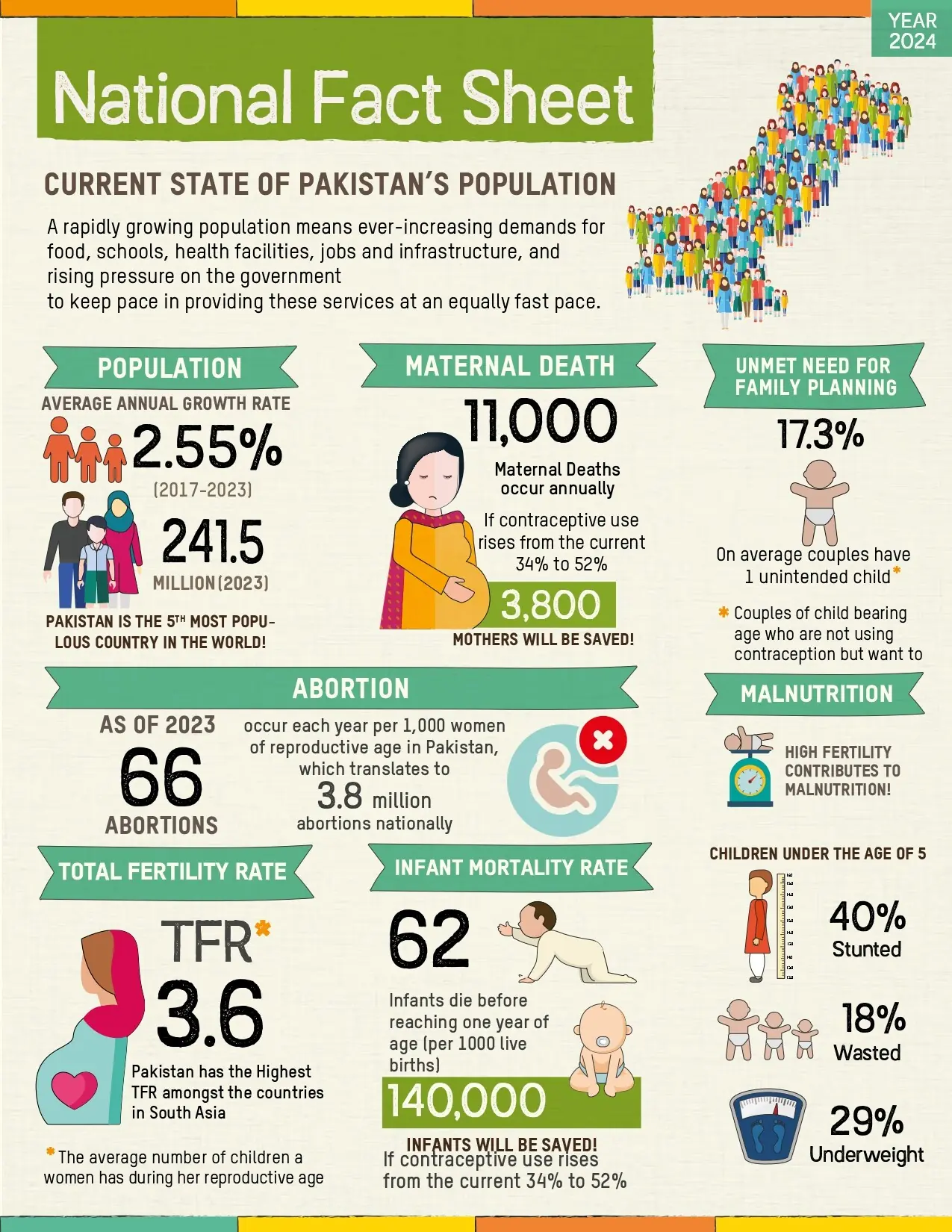
Among the many problems Pakistan faces, including security challenges and climate change, is unchecked population growth. Already home to over 241.5 million people, Pakistan’s population is projected to surpass 300 million within five years and approach 400 million by 2050.
Data compiled by research organisation Population Council, UK Aid and the United Nations Population Fund shows the average annual growth rate — based on data from 2017 to 2023 — is 2.55 per cent, resulting in the population of 241.5 million, making Pakistan the fifth most populous country in the world.
The consequences of this growth are visible across every sector, such as malnutrition and a demand for jobs, infrastructure and healthcare that cannot be kept up with.
Here are some statistics from across the country.
National
The total fertility rate, defined as the average number of children a woman has during her reproductive age, is 3.6, which is the highest amongst countries in South Asia.
This high fertility contributes to issues of malnutrition, where 40pc of children under the age of five are stunted, 18pc are wasted, and 29pc are underweight.
At least 11,000 maternal deaths occur annually, though 3,800 mothers can be saved if contraceptive use rises from the current 34pc to 52pc.
Similarly, with respect to the infant mortality rate, 62 infants die before reaching one year of age per 1,000 live births, equating to 140,000 infants annually; however, infants can be saved if contraceptive use rises from the current 34pc to 52pc.
Punjab
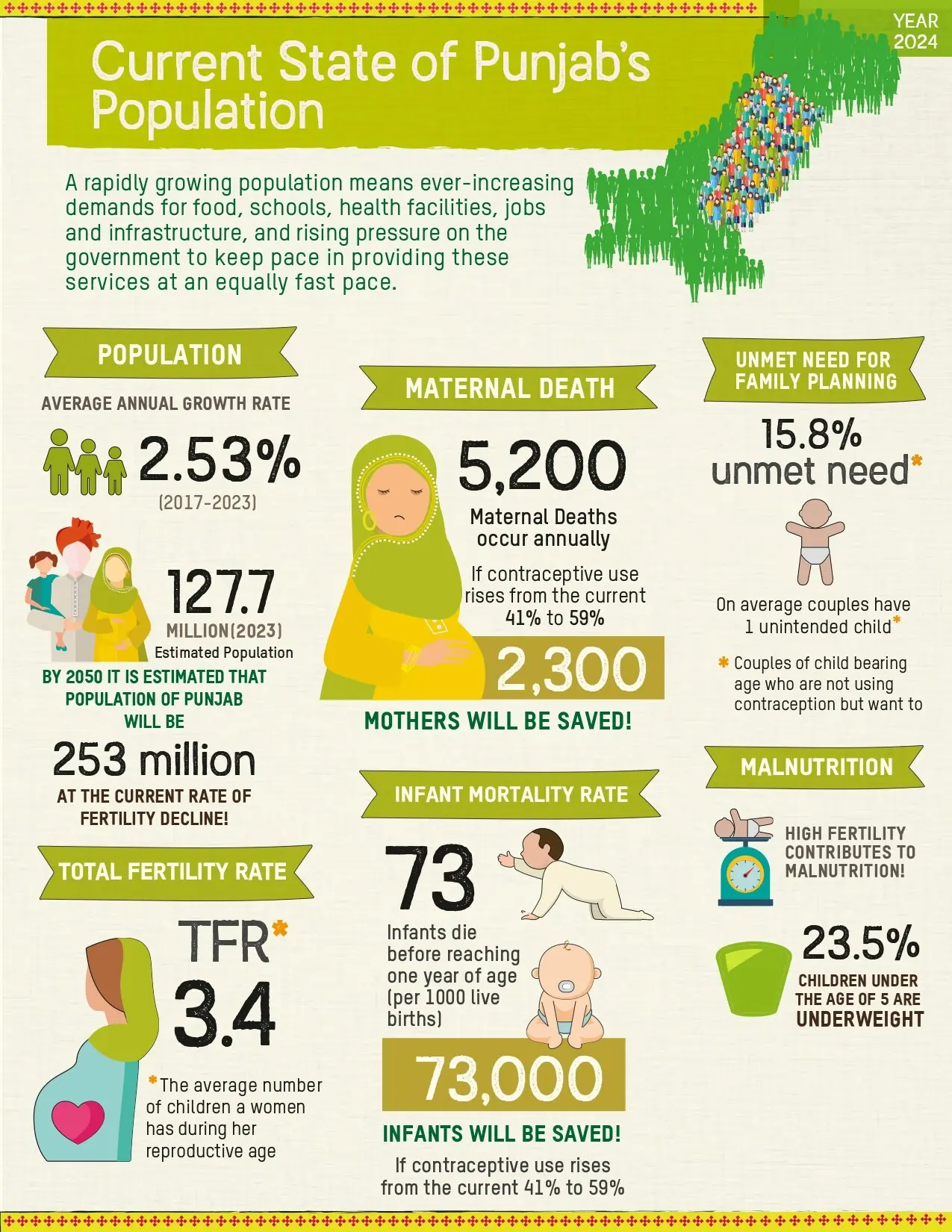
Punjab, Pakistan’s most populous province, has an estimated population of 127.7 million (as of 2023), growing at an average annual rate of 2.53pc.
Projections indicate the population could more than double to 253 million by 2050 if the current total fertility rate of 3.4 children per woman persists.
The province faces a rate of 5,200 annual maternal deaths, alongside an infant mortality rate of 73 per 1,000 live births. Increasing contraceptive use from the current 41pc to 59pc is projected to save 2,300 mothers and 73,000 infants annually.
Currently, 15.8pc of the population has an unmet need for family planning, which corresponds to couples of child-bearing age who are not using contraception but desire to, resulting in an average of one unintended child per couple.
This high fertility rate is also a key factor in the prevalence of malnutrition, with 23.5pc of children under five years of age reported as underweight.
Sindh
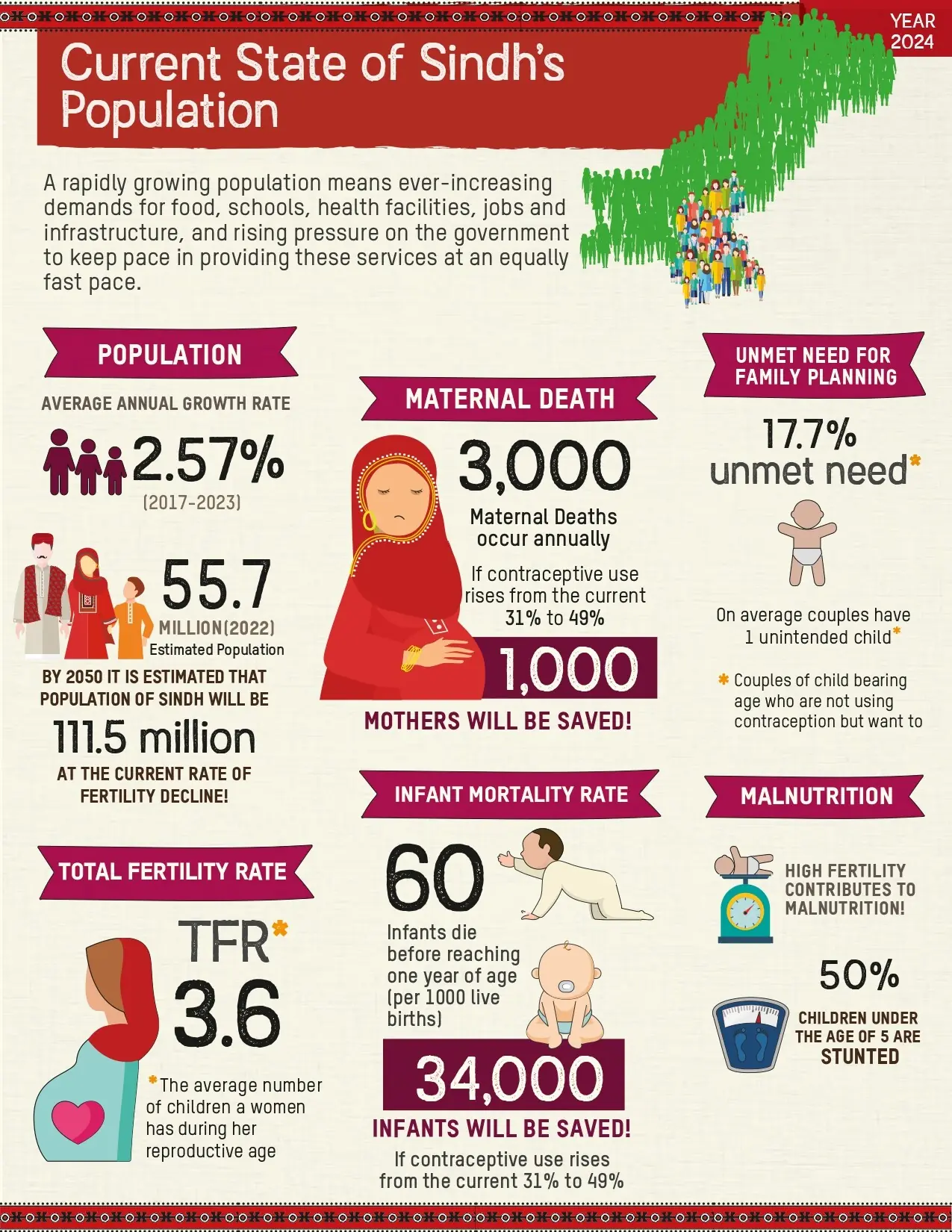
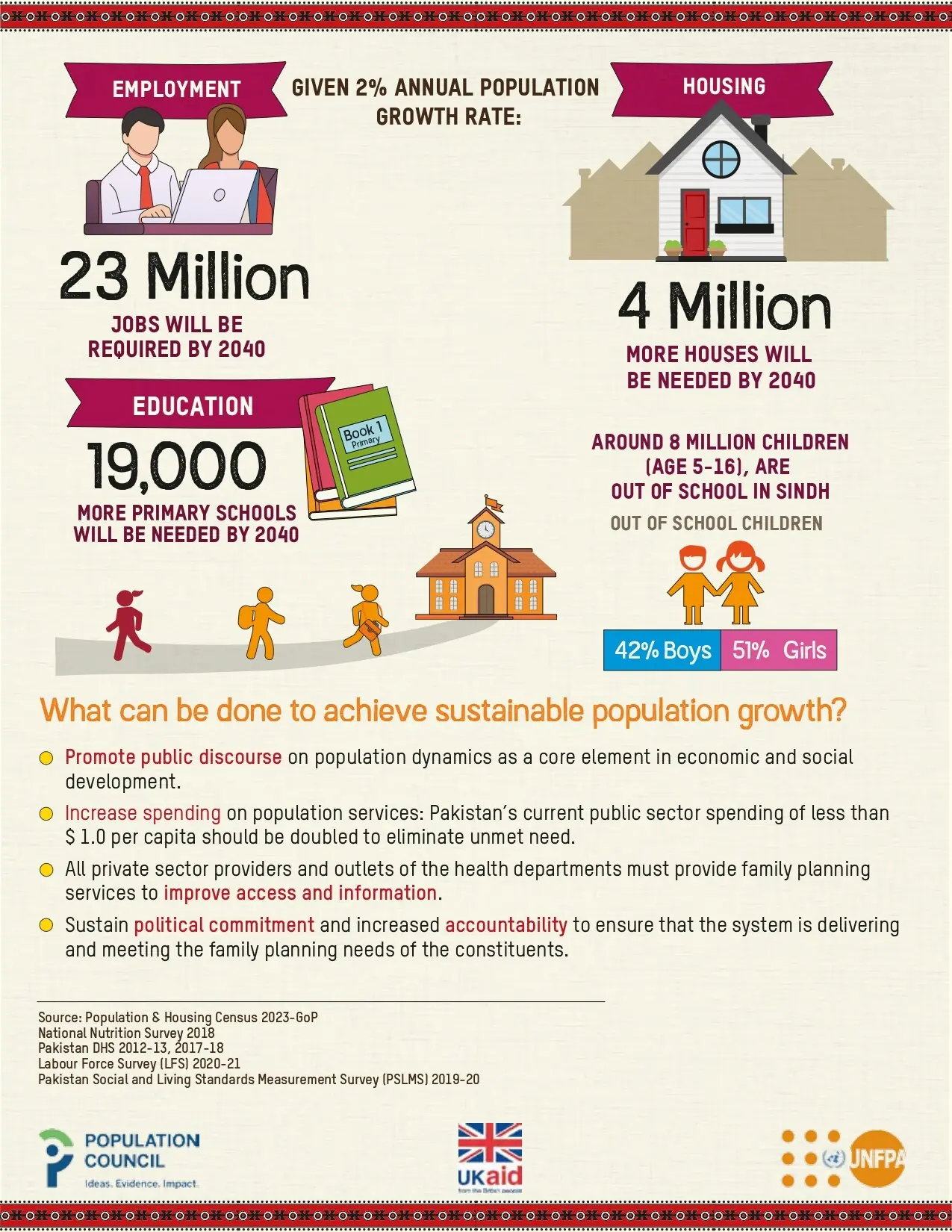
Sindh, while having a smaller estimated population of 55.7 million (2017-2023), is growing marginally faster than Punjab at 2.57pc; it has a higher total fertility rate of 3.6, projecting a population of 111.5m by 2050.
Sindh records 3,000 maternal deaths annually and has an infant mortality rate of 60 per 1,000 live births.
Furthermore, the unmet need for family planning stands at 17.7pc in Sindh, directly contributing to high rates of malnutrition, as evidenced by the staggering 50pc children being stunted in the province.
Balochistan
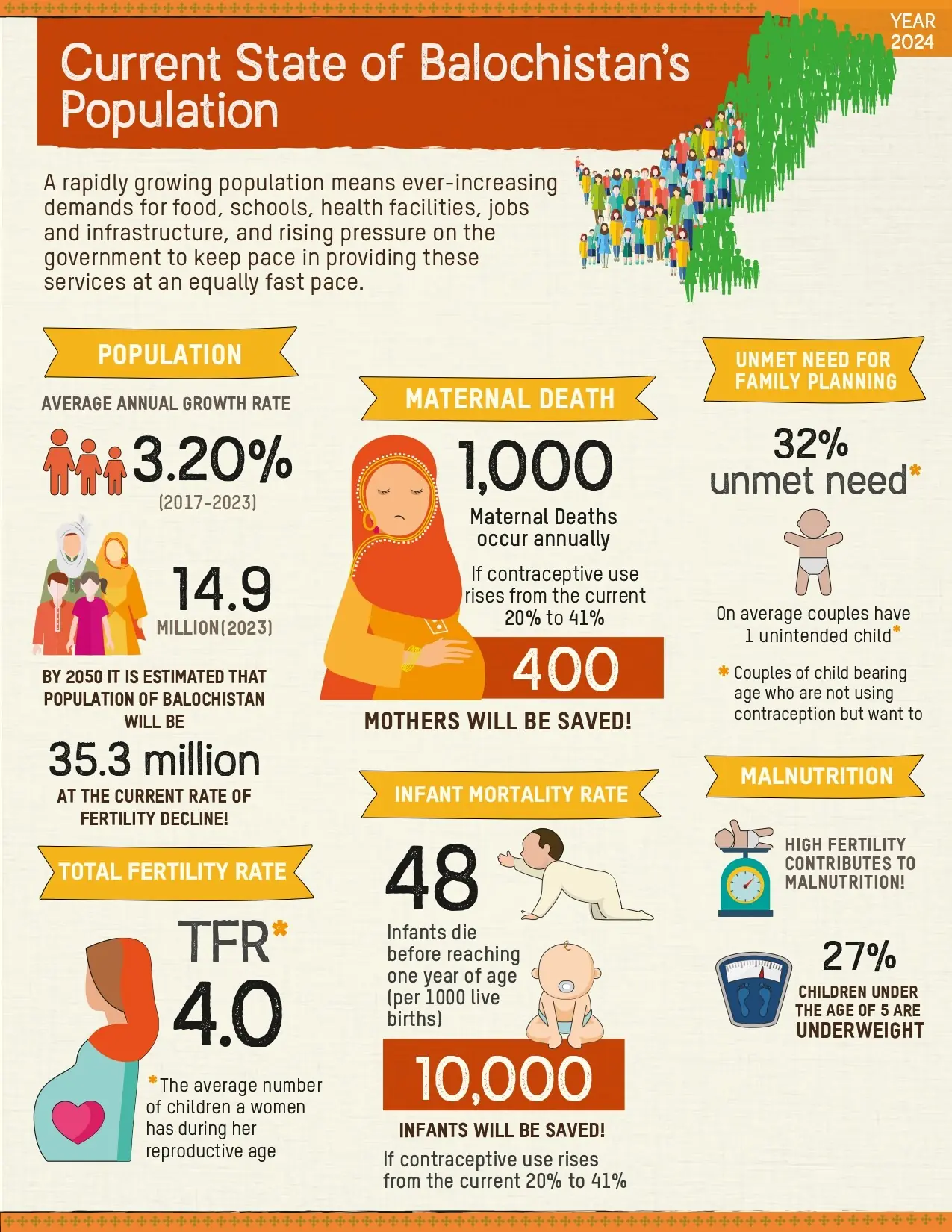
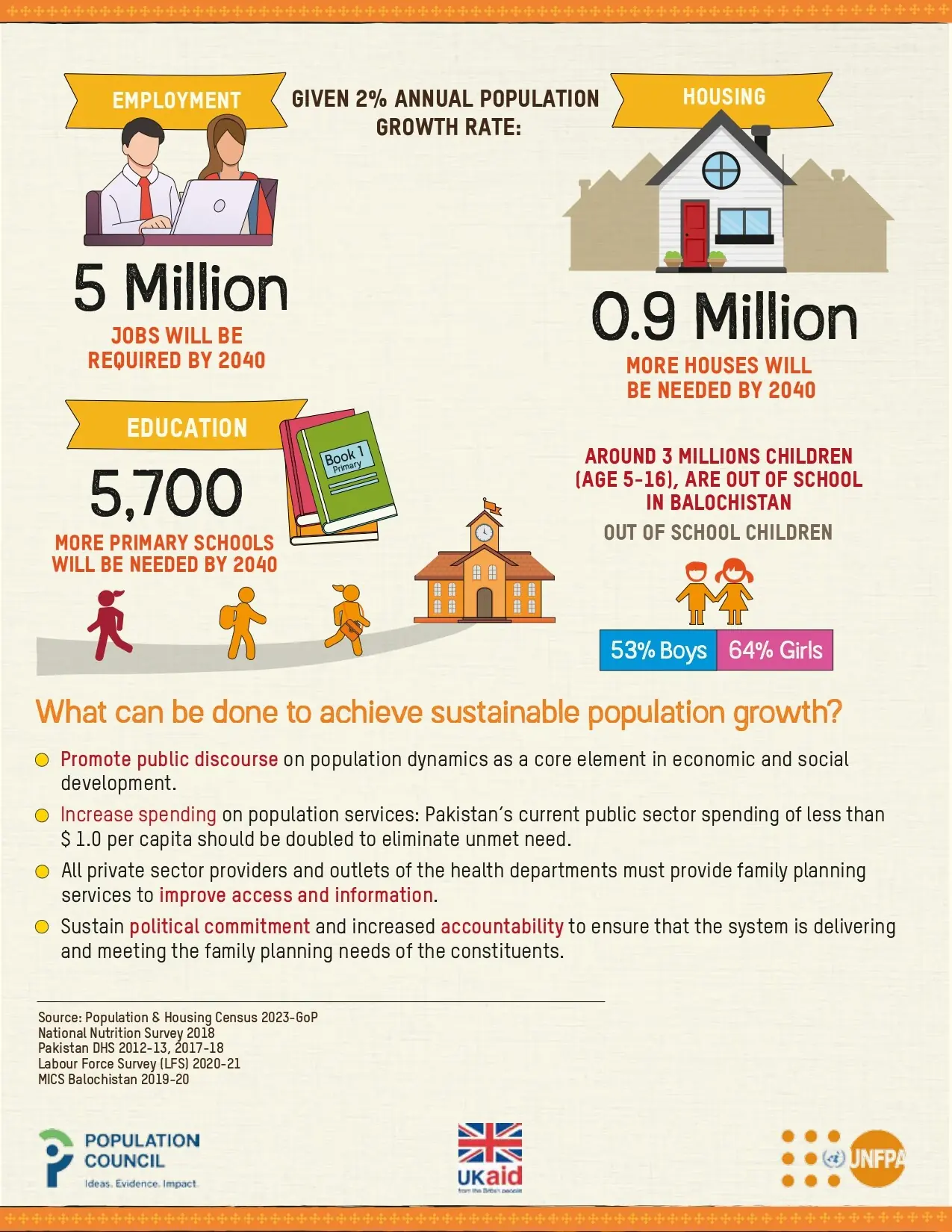
Balochistan, faced with a rapidly growing population, sees an increasing demand for food, schools, health facilities, jobs, and infrastructure.
The average annual growth rate of the population is 3.20pc (2017 to 2023), with the population being 14.9m as of 2023.
By 2050, it is estimated that the population of Balochistan will be 35.3m at the current rate of fertility decline. The total fertility rate is 4.0, representing the average number of children a woman has during her reproductive age.
Maternal mortality is a significant concern, with 1,000 maternal deaths occurring annually.
It is projected that 400 mothers can be saved if contraceptive use rises from the current 20pc to 41pc. The infant mortality rate is also high, with 48 infants dying before reaching one year of age per 1,000 live births. Increasing contraceptive use from 20pc to 41pc could save 10,000 infants.
Additionally, 27pc of children under the age of five are underweight, indicating that high fertility contributes to malnutrition.
Khyber Pakhtunkhwa
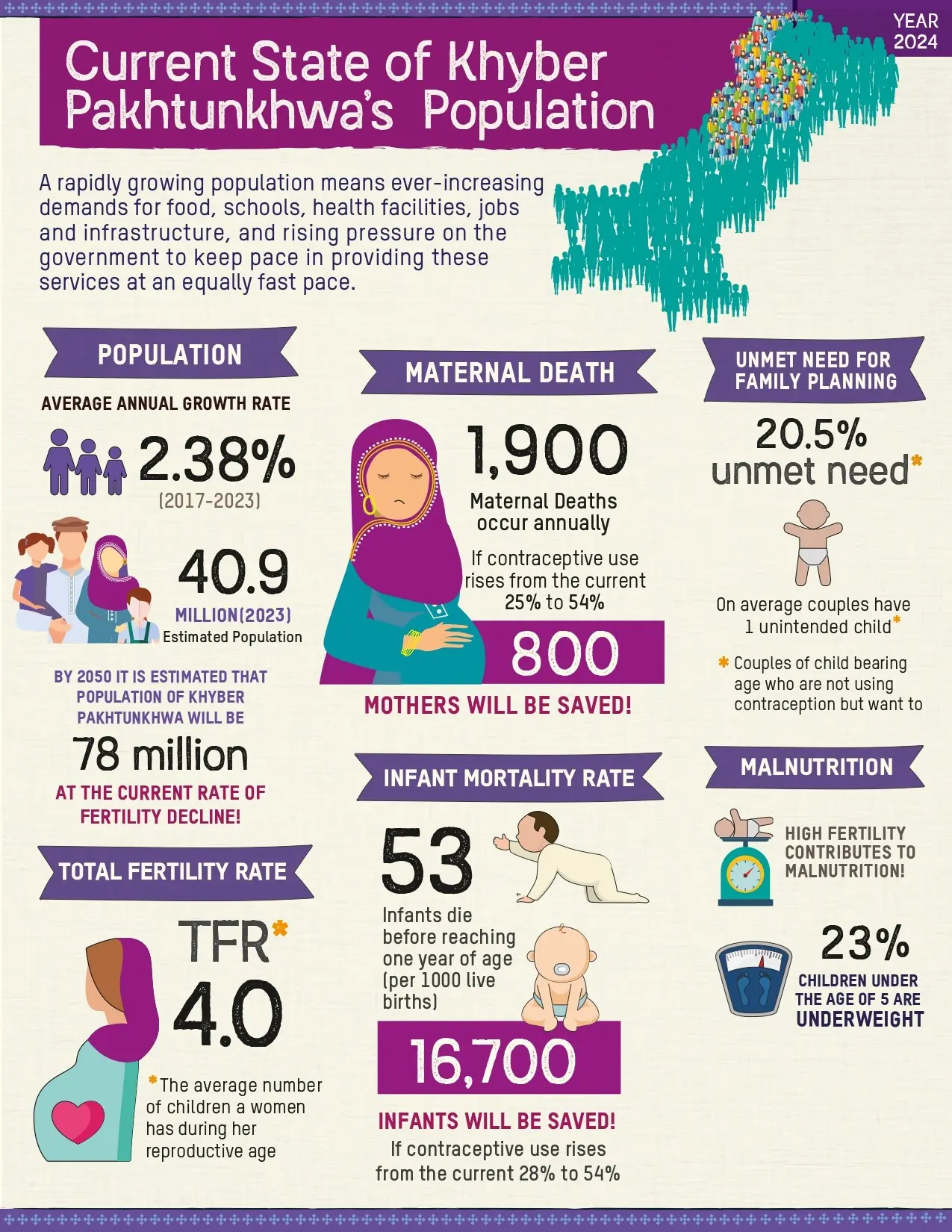
Khyber Pakhtunkhwa’s population is growing at an average annual rate of 2.38pc, having reached an estimated 40.9m in 2023, with projections suggesting it could rise to 78m by 2050 if current fertility trends continue.
The province records around 1,900 maternal deaths each year, though it is estimated that increasing contraceptive use from 25pc to 54pc could save 800 mothers annually.
The total fertility rate stands at 4.0 children per woman. Infant mortality remains high, with 53 deaths per 1,000 live births and an estimated 16,700 infants who could be saved if contraceptive use increased from 28pc to 54pc.
High fertility is also linked to malnutrition, and 23pc of children under five are underweight.
Header Image: A census enumerator notes details from a resident during Pakistan’s 6th population census in Karachi on March 15, 2017. — Reuters
from Dawn - Home https://ift.tt/VeXvQyC
Comments
Post a Comment