Bangladesh’s Sheikh Hasina, sentenced to death in absentia on Monday for her deadly crackdown on student protesters last year, has been a dominant figure in the South Asian nation for half a century, a career rooted in bloodshed.
Thrust into prominence with the assassination of her father, independence leader Sheikh Mujibur Rahman, and much of her family in a military coup, Hasina early on fought for democracy, but her long reign as prime minister became marked by arrests of opposition leaders, crackdowns on free speech and suppression of dissent.
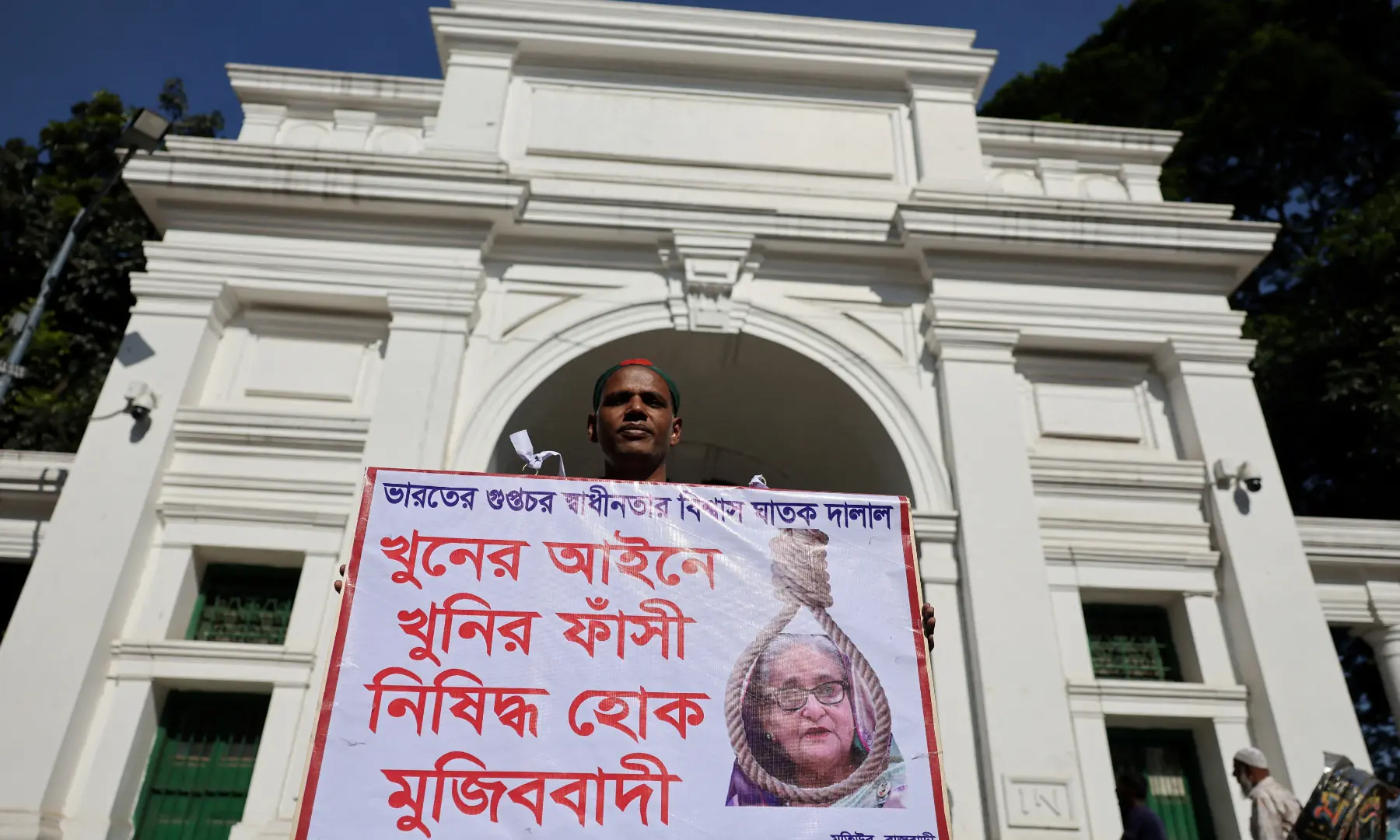
She was found guilty of ordering lethal force by a tribunal in the capital Dhaka 15 months after resigning and fleeing to India in the face of a student-led uprising that killed hundreds or more.
Joined rival to seek democracy before feud
Despite criticism of her years in power, Hasina, 78, was credited with turning around the economy and the massive garments industry of the Muslim-majority nation of 170 million, while winning international praise for sheltering Rohingya Muslims fleeing persecution in neighbouring Myanmar.
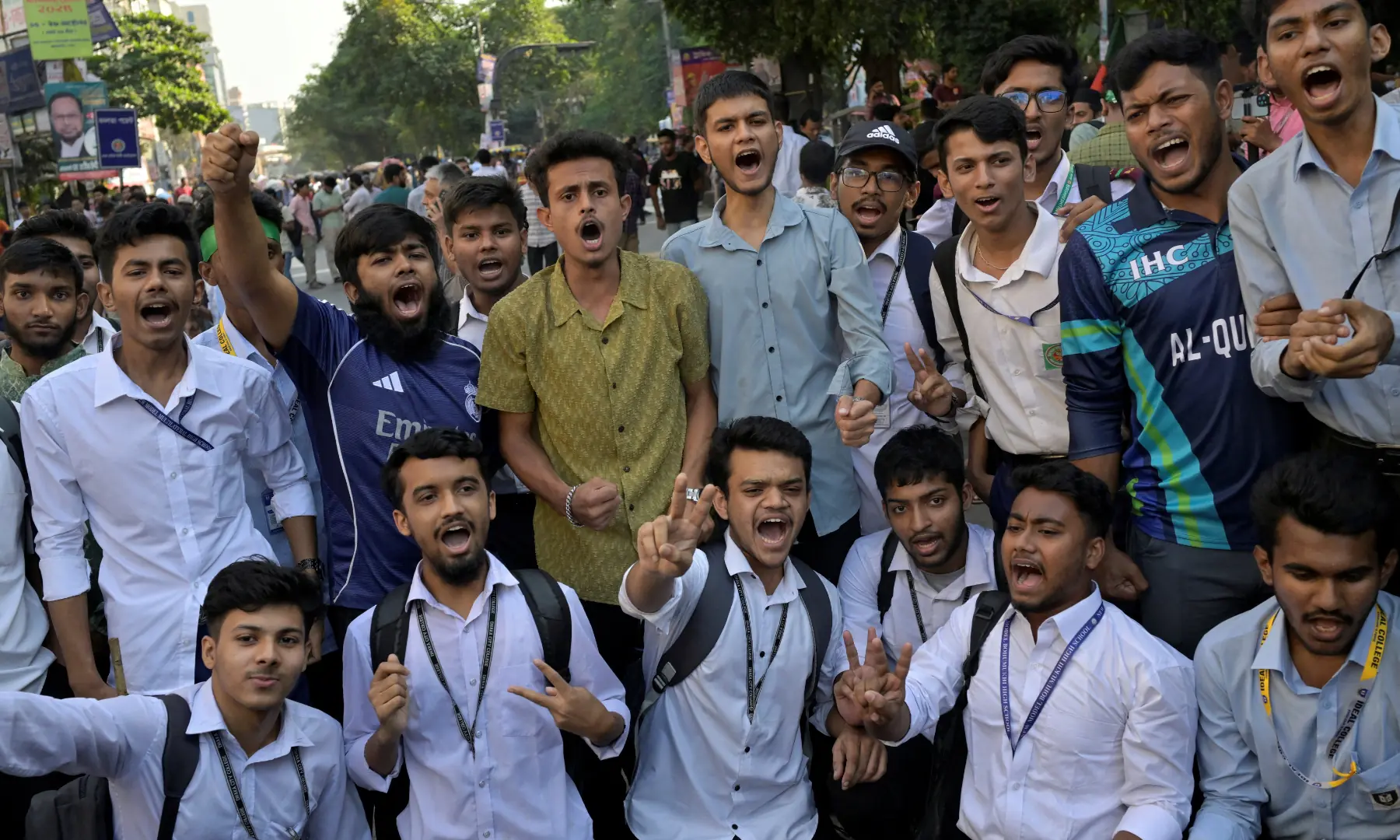
But her downfall — she was ousted less than seven months after winning a fifth term as leader — was the protests that began over job quotas and swelled into a movement demanding her removal.
Hasina, from her exile in India, has denied the allegations against her, saying the verdict was “biased and politically motivated”.
“I am not afraid to face my accusers in a proper tribunal where evidence can be weighed and tested fairly,” Hasina said in a statement after the verdict.
Her state-appointed defence counsel told the court the charges were baseless.
A UN report in February said up to 1,400 people may have been killed during the protests, most from gunfire by security forces, and cited evidence that it was official policy to attack and violently repress anti-government protesters and sympathisers.
The verdict by the International Crimes Tribunal — a court Hasina set up to try war crimes from Bangladesh’s 1971 war for independence from Pakistan — marks a dramatic turn for a political career that began when she avoided death during the 1975 coup because she happened to be in Europe.
Born in 1947 in the southwest of the country, which was then East Pakistan, Hasina was the eldest of five children.
After getting a degree in Bengali literature from Dhaka University in 1973, she gained political experience as a go-between for her father and his student followers.
Exiled to India after the coup, she returned in 1981 and was elected head of the Awami League, Bangladesh’s oldest political party and a force in the struggle for independence.
Hasina joined political foe Khaleda Zia, chief of the rival Bangladesh Nationalist Party, to lead a popular uprising for democracy that toppled military ruler Hossain Mohammad Ershad in 1990.
But the alliance did not last. The bitter rivalry between the two — called the “battling begums”, using an Urdu honorific for prominent women — went on to dominate Bangladeshi politics for decades.
Hasina first led the Awami League to victory in 1996, serving a five-year term, then regained power in 2009, never to lose it again.
Claims of abuses, downfall, exile
As time went on, critics said, she became increasingly autocratic and her rule was marked by mass arrests of political opponents and activists, forced disappearances and extrajudicial killings.
Rights groups warned of a virtual one-party rule by the Awami League. Hasina defended her tenure as a period of stability and development, arguing that strong, uninterrupted leadership was needed to keep Bangladesh on track.
Khaleda — herself a former prime minister and the widow of an assassinated former president — was jailed in 2018 on graft charges that her party said had been trumped up. She was freed after Hasina’s ouster.
Hasina and Khaleda accused each other of trying to create chaos and violence to jeopardise a democracy that had yet to take firm root in Bangladesh.
The once-racing economy has slowed sharply since Russia’s 2022 invasion of Ukraine pushed up prices of imported fuel and food, forcing Bangladesh to turn last year to the International Monetary Fund for a $4.7 billion bailout.
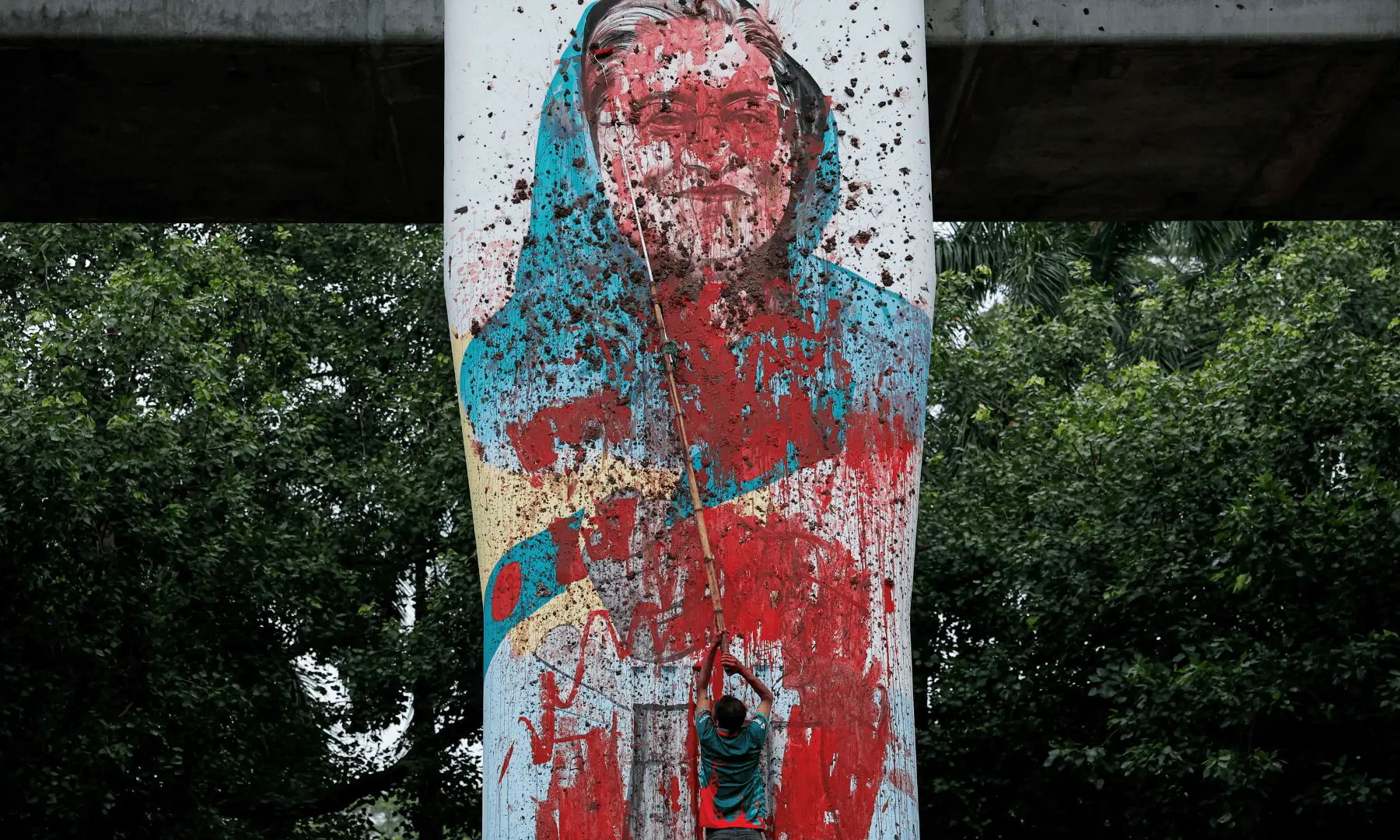
After Hasina fled the uprising in August last year with her sister on a military helicopter, jubilant crowds stormed unopposed into the opulent presidential residence, carrying out looted furniture and televisions.
Since then, Bangladesh has been governed by an interim administration headed by Nobel Peace laureate Muhammad Yunus — a figure Hasina had attacked for years, who was convicted of graft under her government.
Her Awami League is barred from contesting parliamentary elections to be held in early February.
Header Image: Sheikh Hasina speaks during a meeting with foreign observers and journalists at the Prime Minister’s residence in Dhaka, Bangladesh, on January 8, 2024. — Reuters
from Dawn - Home https://ift.tt/DKkQvYy
Comments
Post a Comment