
Indonesia turns down ear-splitting ‘haram’ street parties

People in an Indonesian village watched as a tower of loudspeakers mounted on a truck rumbled through their usually serene home, blasting a thumping bass loud enough to crack windows.

Loudspeaker towers are commonplace on Indonesia’s main island of Java, blaring a repetitive mix of electronic tunes and traditional folk music at street parties, but they have drawn the ire of local authorities and calm-seeking neighbours.

The loudspeaker stacks have proven so disruptive that officials this month have restricted their use while religious bodies have declared excessive and damaging sound from them to be “haram”, or forbidden under Islamic law.

“The sound is booming from 1pm to 3am. They play loud music and drink alcohol,” Ahmad Suliyat, a resident of Ngantru village in East Java province, told AFP.

“It’s really disturbing.” Indonesians in East Java have shared videos on social media of cracked walls, falling roof tiles and damaged stores caused by the noise impact known as “sound horeg”, which loosely means to move or vibrate in Javanese.
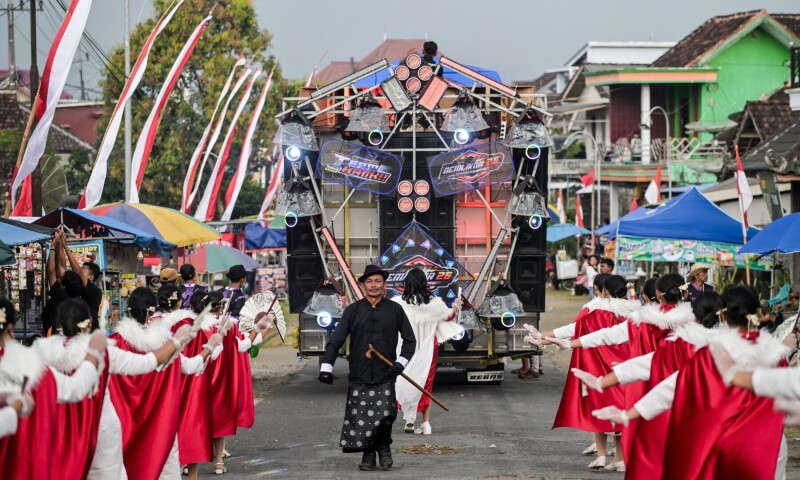
This photo taken on August 9, 2025, shows dancers performing as they follow a truck mounted with a tower of subwoofers and spotlights during a “sound horeg”, which loosely means to move or vibrate in Javanese, held as part of Indonesia’s 80th Independence Day celebrations in Malang, East Java. — AFP

The online backlash forced authorities in East Java to issue an order this month limiting noise levels and specifying the times and locations loudspeakers can be used. “It was made for health and security reasons. The noise level must be regulated so it will not disturb the public peace and order,” East Java governor Khofifah Indar Parawansa told AFP.

Hearing problems

Ear-splitting noise has been shown to have adverse health consequences, including a higher risk of heart conditions for those exposed.

And Indonesia’s loudspeaker towers, popular for little more than a decade in the world’s most populous Muslim nation, have had dire consequences for some who attend the deafening street gatherings.

This photo taken on August 9, 2025, shows dancers performing as they follow a truck mounted with a tower of subwoofers and spotlights during a “sound horeg”, which loosely means to move or vibrate in Javanese, held as part of Indonesia’s 80th Independence Day celebrations in Malang, East Java. — AFP

A woman died this month after allegedly suffering cardiac arrest caused by loudspeaker towers at a carnival she attended, local media reported, while there has been an increase in hearing problems among those attending the events.

The East Java government has capped sound system levels at 120 decibels, while mobile units used in parades or protests are limited to 85 decibels.

Mobile units are also banned from being used near schools, hospitals, ambulances and places of worship that are in session.

In July, a local Islamic council issued a religious edict that said excessive sound at parties that is capable of causing damage is forbidden by religion.

“The use of a sound system excessively, especially during a wedding convoy, or any other events that cause noise, disturb road users, or make people neglect worshipping, is haram,” read the fatwa.

Locals typically rent the speaker towers for weddings, circumcisions and Independence Day events – all celebrations that can last until dawn.

Some, like Daini, who goes by one name like many Indonesians, believe the loudspeakers are a local tradition that should be kept.

She glanced at her cracked window, held together by duct tape, as music blared from the truck in Ngantru.

“The glass cracked during a sound horeg event last year. But that’s OK, people here like loud events,” said the 61-year-old.

Lax enforcement

But loudspeakers have continued blasting above the new limits, due to lax enforcement by local authorities.

After the rules were issued, an AFP journalist heard loudspeaker towers blaring music at an East Javan event as authorities watched on.

The World Health Organisation says sound at 85 decibels and above can cause hearing damage over time, and anything above 120 decibels can cause immediate harm.
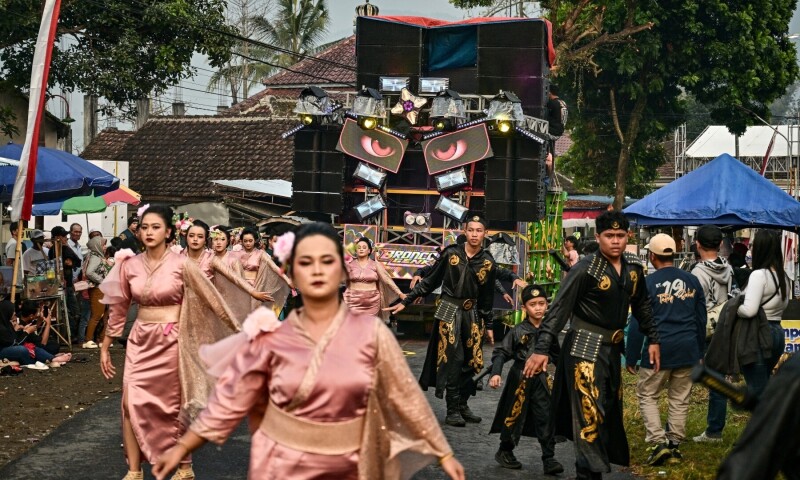
This photo taken on August 9, 2025, shows dancers performing as they follow a truck mounted with a tower of subwoofers and spotlights during a “sound horeg”, which loosely means to move or vibrate in Javanese, held as part of Indonesia’s 80th Independence Day celebrations in Malang, East Java. — AFP

Some Indonesians posted screenshots online of apps registering loudspeaker sound levels as high as 130 decibels.

Operators of loudspeaker towers argue they are responding to demand that generates revenue for local businesses.

“I believe most people who dislike sound horeg are not from here,” David Stevan Laksamana, a 40-year-old loudspeaker rental owner in Malang, told AFP.

“In Malang alone, it employed tens of thousands of people. This business is helping the economy.” Others who cannot stand the disruptive street parties fear reporting them, with some loudspeaker tower owners reportedly parking outside complainants’ houses to blare music for hours.

“I never complain to the village head,” said Ahmad.

“I just keep quiet. I’m afraid of intimidation if I say anything. “


from The Dawn News - Home https://ift.tt/bqUl0GE

Comments

Popular posts from this blog

Ministers rubbish notion that proposed retirement age extension to favour ‘one particular institution’

Information Minister Attaullah Tarar on Tuesday rubbished the notion that a proposed extension in the retirement age was to favour “one particular institution”, adding that the move would be implemented across the board if approved. The rebuttal comes in the wake of media reports claiming that the government was mulling changes to the Constitution to fix the tenure of the chief justice . Currently, judges of the Supreme Court, including the chief justice, retire after attaining the age of superannuation, i.e. 65 years, as stipulated in Article 179 of the Constitution. While giving his opinion recently on the reports of the constitutional amendment, Law Minister Azam Nazeer Tarar had said he “will not vehemently turn down the proposals related to the tenure of the chief justice”. Addressing the issue during a press conference in Islamabad today along since Finance Minister Muhammad Aurangzeb and the law minister, Attaullah said the extension in the retirement age was “a proposal to a...

Explainer: Iran’s economy faces rocky road amid rising prices, falling currency

Iran’s economy is going through one of its most difficult periods in years, fueled by sanctions, high inflation, and a significant drop in the value of the national currency, the rial. These pressures have had a direct impact on living standards and have also fueled recent protests. The protests began on Dec. 28 in commercial hubs in the capital Tehran, when shopkeepers, merchants, and small business owners staged strikes and demonstrations to protest soaring inflation, the collapsing rial, and deteriorating economic conditions, and have since grown into nationwide anti-government expressions of discontent involving workers, students, and others across multiple cities. The Iranian president said Sunday that his government is determined to address Iran’s economic problems amid the protests. Masoud Pezeshkian said the government admits to “shortcomings and problems” and is working hard to alleviate the people’s concerns, especially on the economy. Currency collapse at the centre of c...

The Republican primary race for president in 2024

The Republican primary race for president in 2024 is already shaping up to be a competitive one. There are a number of high-profile candidates who have already announced their intention to run, and more are expected to join the field in the coming months. The frontrunner for the nomination is former President Donald Trump. Trump has been teasing a 2024 run for months, and he has a large and loyal following among Republican voters. However, he is also a polarizing figure, and his candidacy could alienate some moderate Republicans. Another potential contender for the nomination is Florida Governor Ron DeSantis. DeSantis has been praised by many conservatives for his handling of the COVID-19 pandemic and his opposition to vaccine mandates. He is also seen as a rising star in the Republican Party. Other potential candidates include former Vice President Mike Pence, former Ambassador Nikki Haley, and Senator Tim Scott. Pence is a more traditional Republican who could appeal to moderate vote...